
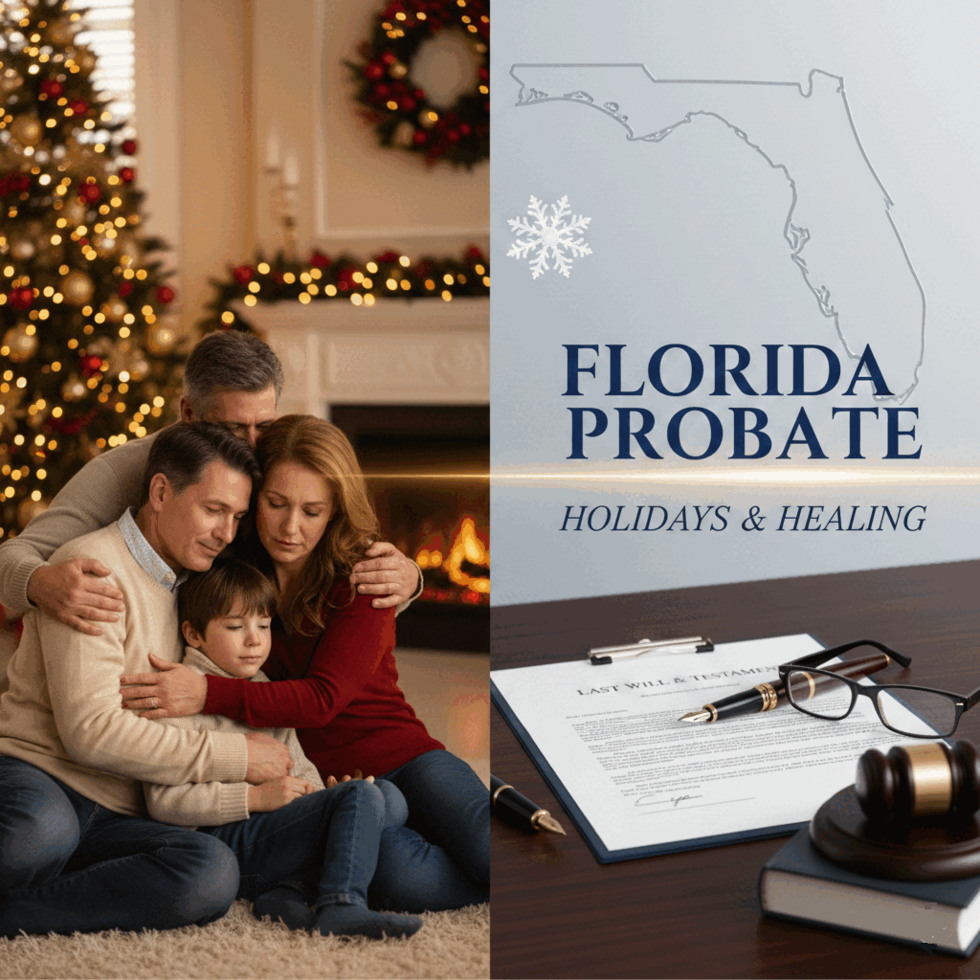
Navigating Grief and Florida Probate During the Holidays
The holiday season is often a time for joy, togetherness, and reflection. For many people, though, it can also be a time of profound loss, especially when a loved one passes away during the holidays. Grief is heavy enough on its own. Combined with the demands of Florida probate, it can feel overwhelming.
If you are in this situation, please know that you are not alone, and help is available.
Understanding Florida Probate
Probate is the court process of validating a will, identifying the deceased person's assets, paying any debts and taxes, and distributing what remains to the beneficiaries or heirs. In Florida, how long probate takes and how complex it is depend on the size and nature of the estate.
Recent changes to Florida law have made simpler options available to more families. As of July 1, 2026, estates worth up to $150,000 (not counting property protected from creditors, such as a homestead) may qualify for summary administration, a shorter and less costly process. The previous limit was $75,000. The limit for certain small estates settled without any administration also doubled, from $10,000 to $20,000.
Why the Holidays Can Make It Harder
- Emotional strain: Grief often feels more intense during the holidays, which can make it harder to focus on legal and administrative tasks.
- Availability of professionals: Courts, attorneys, and other professionals may have reduced hours or holiday closures, which can slow the process.
- Family dynamics: Holiday gatherings are meant to bring comfort, but they can also heighten existing family tensions, especially when estate matters come up.
Steps to Take When You're Ready
It's important to give yourself time to grieve. When you feel ready to address the practical side, here are some first steps to consider:
- Locate important documents: Look for the deceased's will, trust documents, life insurance policies, deeds, and financial statements. If you have the original will, Florida law requires you to deposit it with the clerk of court within 10 days of learning of the death.
- Secure assets: Take steps to protect the deceased's home, vehicles, and other valuable property.
- Gather information: Start a list of assets, such as bank accounts, real estate, and investments, and debts, such as credit cards, mortgages, and loans.
- Consult a Florida probate attorney: An experienced probate attorney can explain your rights and responsibilities, handle the court filings, and help determine whether formal administration, summary administration, or disposition without administration is right for the estate.
Finding Support
You don't have to go through this alone.
- Lean on family and friends: Let the people who care about you help, both emotionally and with practical tasks.
- Seek grief counseling: Professional support can be invaluable as you process your loss.
- Your probate attorney is a resource: Beyond legal advice, your attorney can walk you through the overall process and take some of the stress off your shoulders.
