
Published November 7, 2025
Denaturalization—the process of legally revoking a person's acquired U.S. citizenship—is a grave action with life-altering consequences. While historically rare and reserved for egregious cases, recent shifts in enforcement priorities have thrust this long-standing process into the spotlight, sparking fear and controversy among naturalized citizens.
What is Denaturalization?
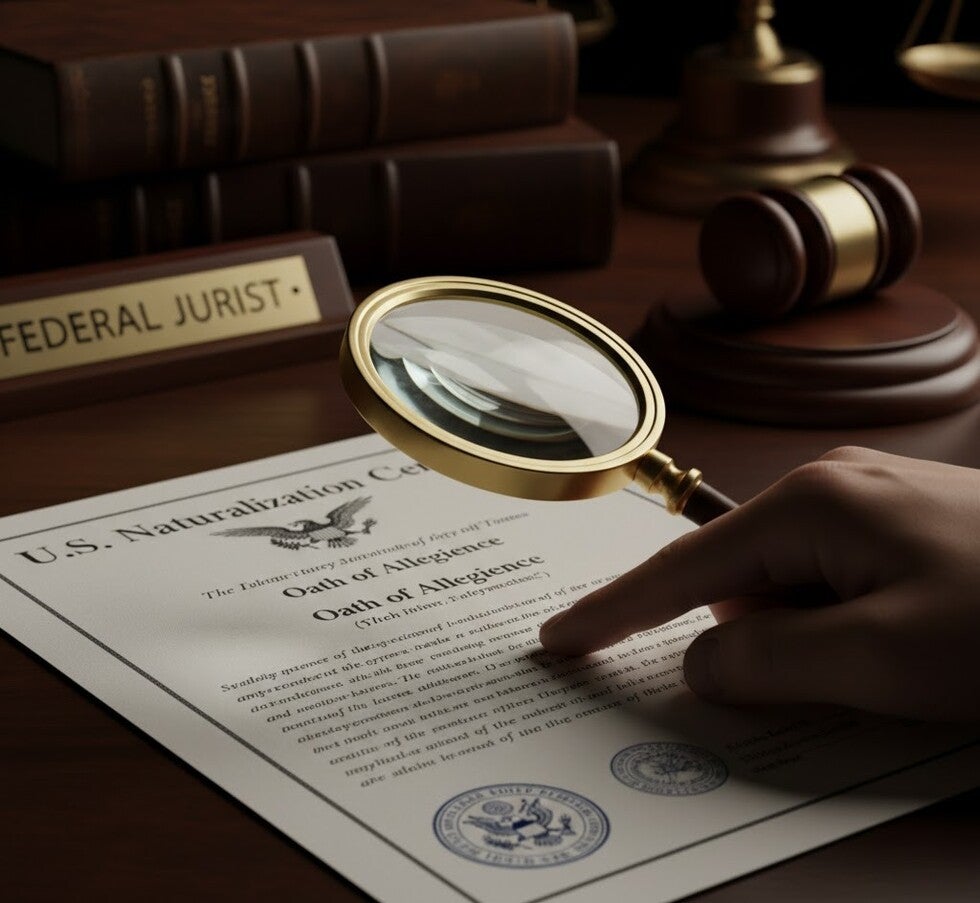
Denaturalization is the government's legal act of revoking U.S. citizenship from a person who gained it through the naturalization process. This happens when the government proves that the individual's citizenship was obtained unlawfully or fraudulently.
At its core, denaturalization aims to uphold the integrity of the naturalization system by ensuring that all legal requirements were met honestly.
Key Grounds for Revocation:
Citizenship can be revoked for two main reasons, which require the government to meet a very high burden of proof in court:
-
Illegal Procurement: The individual did not meet the basic statutory eligibility requirements at the time of naturalization (e.g., failing to meet residency requirements, not having Lawful Permanent Resident status).
-
Fraud or Misrepresentation: The individual concealed a material fact or willfully lied during the naturalization process. Examples include:
-
Concealing a disqualifying criminal record or past deportation orders.
-
Providing false information about residency, marital status, or subversive affiliations.
The Denaturalization Process
Unlike administrative immigration status changes, citizenship revocation requires a judicial/court order.
-
Investigation: Agencies like USCIS (U.S. Citizenship and Immigration Services) or ICE (Immigration and Customs Enforcement) review naturalization records for inconsistencies or evidence of fraud.
-
Referral: Cases deemed to have sufficient evidence are referred to the Department of Justice (DOJ).
-
Lawsuit: The DOJ files a civil lawsuit in a federal district court seeking to revoke the individual's citizenship.
-
Proof in Court: The government must prove its case by "clear, convincing, and unequivocal evidence." (This is a very high burden). The naturalized citizen has the right to defend themselves.
-
Judgment: If the court rules against the citizen, the citizenship is revoked.
Crucially: Denaturalization is a civil process, but the consequences—losing the right to vote, travel freely, and access federal benefits, and facing possible deportation—are profoundly huge.
Who Should Be Worried?
For the vast majority of naturalized citizens who were honest and eligible at the time of their oath, there is no cause for panic. Denaturalization remains a complex and resource-intensive legal battle for the government to win.
However, heightened scrutiny means that individuals who:
-
Concealed a significant criminal history.
-
Provided false names or identities to obtain LPR status or citizenship.
-
Hid their involvement with terrorist or subversive organizations.
...face the highest risk.
Does Denaturalization Affect Family?
Generally, denaturalization affects only the individual involved. Family members (spouses or children) who derived their citizenship through the naturalized parent or spouse usually retain their status, unless their citizenship was based on the exact same fraudulent or unlawful actions.
Losing U.S. citizenship is devastating. If you are a naturalized citizen who is concerned about your history or has received any notice regarding your status, seeking immediate legal counsel is crucial.
If you're concerned about denaturalization or need expert guidance on safeguarding your citizenship, schedule a consultation by calling our office or using the schedule link. Your Immigration Matters and we are here to help!
